
Welcome to St. Paul’s
Welcome one another, therefore, just as Christ has welcomed you, for the glory of God.
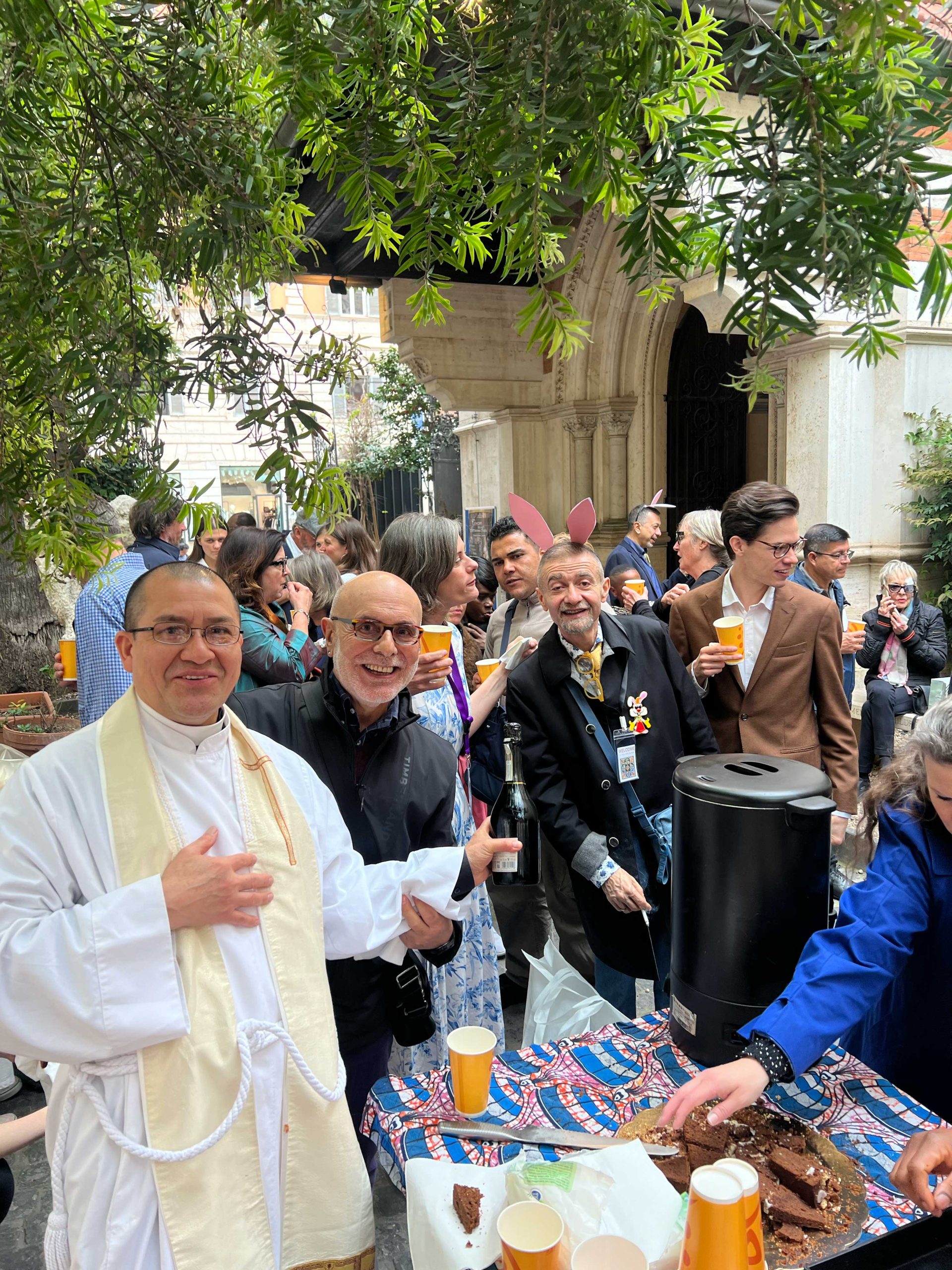
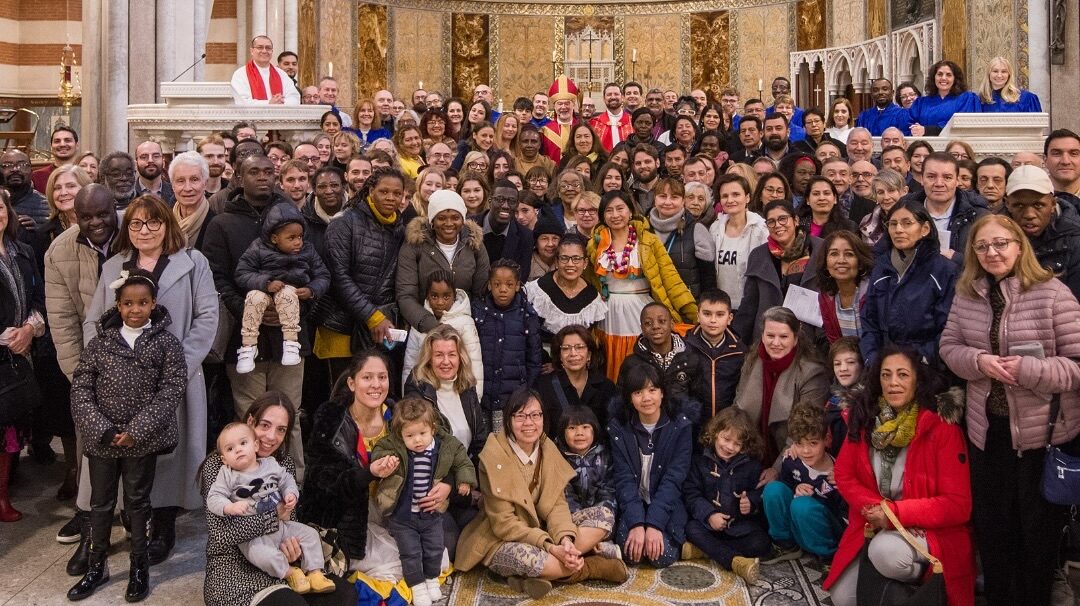
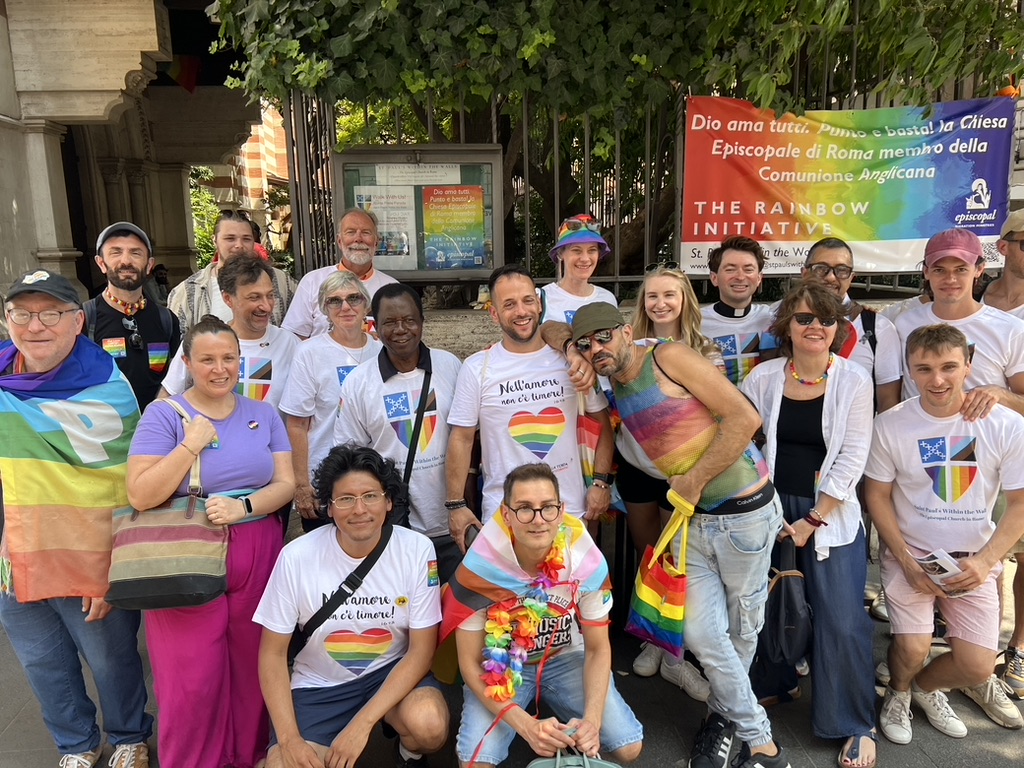
These words of instruction from Saint Paul to the early church in Rome live at the heart of the God’s continuing call to Saint Paul’s Within the Walls. This historic parish—first gathered in the mid-nineteenth century—has welcomed people from around the world for more than 150 years.
The welcome of our community is extended equally to people living far from home, and to people traveling far from home. It is extended to thousands of refugees every year, seeking hope and shelter in their flight from war, violence, and the relentless forces of climate change. And it is extended to young adults giving a year of service to the church as interns in the Young Adult Service Corps.
The welcome of this parish is expressed as a principal center of the ecumenical work and witness of The Episcopal Church, situated at the center of inter-Communion conversations with Roman Catholic, Lutheran, Methodist, Reformed, and Orthodox traditions. And it also takes the form of welcoming and receiving visitors and conversations from around the Anglican Communion, not least through Saint Paul’s close links with the Anglican Centre in Rome.
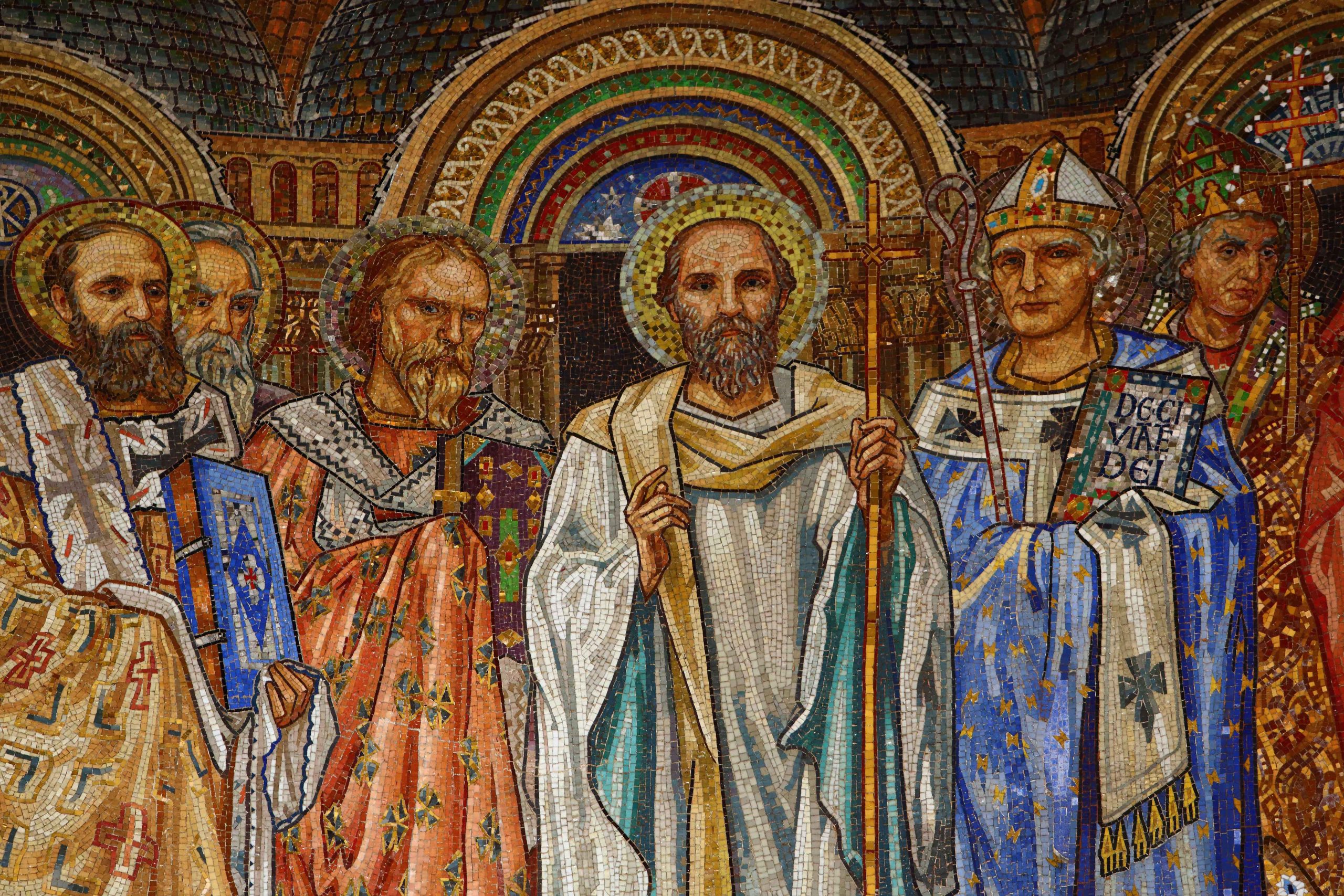
And if you visit us, you will quickly find that we welcome all kinds of programs from the cultural world of Rome. Concerts, art exhibitions, and many other treasures may be found within the walls of this beautifully restored church designed by the architect George Edmund Street, with its glorious mosaics by Edward Burne-Jones.
Wherever you are on your journey of faith—expat or explorer, refugee or regular—we welcome you here, as Saint Paul first taught us.
See you in church,

The Right Reverend Mark D. W. Edington
Bishop in Charge
What is an Episcopalian?
Lorem ipsum dolor sit amet, consectetur adipiscing elit. Morbi iaculis tellus eu eros venenatis mattis. Etiam id est imperdiet, vestibulum mi vitae, egestas risus. Fusce dictum, neque ac rutrum porttitor, lacus quam auctor nisl, sed auctor risus lectus sed enim. Quisque congue nibh non enim dictum tempus id sit amet orci. Mauris vulputate dolor in sapien congue tempus. Aliquam erat volutpat. Suspendisse ligula nunc, interdum sed fringilla at, aliquam et metus. Vestibulum vestibulum pulvinar felis, viverra dictum tellus. Nam varius sed libero at placerat.
Suspendisse cursus enim id lorem euismod, quis viverra massa accumsan. Mauris in velit lacinia, sagittis justo ac, euismod enim. In ut elit in eros pretium bibendum porta id arcu. Nullam auctor neque vel dapibus pellentesque. Sed rhoncus nulla sapien, sit amet pulvinar arcu tincidunt a. In venenatis dapibus nulla, id lobortis eros luctus a. Quisque a semper urna. Integer elementum dui non mauris aliquet fermentum. Nam tristique auctor pulvinar. Fusce ultrices diam a nibh consequat, sed consectetur quam suscipit. In nunc velit, sollicitudin vitae euismod eget, dapibus eu magna.
History
Lorem ipsum dolor sit amet, consectetur adipiscing elit. Morbi iaculis tellus eu eros venenatis mattis. Etiam id est imperdiet, vestibulum mi vitae, egestas risus. Fusce dictum, neque ac rutrum porttitor, lacus quam auctor nisl, sed auctor risus lectus sed enim. Quisque congue nibh non enim dictum tempus id sit amet orci. Mauris vulputate dolor in sapien congue tempus. Aliquam erat volutpat. Suspendisse ligula nunc, interdum sed fringilla at, aliquam et metus. Vestibulum vestibulum pulvinar felis, viverra dictum tellus. Nam varius sed libero at placerat.
Suspendisse cursus enim id lorem euismod, quis viverra massa accumsan. Mauris in velit lacinia, sagittis justo ac, euismod enim. In ut elit in eros pretium bibendum porta id arcu. Nullam auctor neque vel dapibus pellentesque. Sed rhoncus nulla sapien, sit amet pulvinar arcu tincidunt a. In venenatis dapibus nulla, id lobortis eros luctus a. Quisque a semper urna. Integer elementum dui non mauris aliquet fermentum. Nam tristique auctor pulvinar. Fusce ultrices diam a nibh consequat, sed consectetur quam suscipit. In nunc velit, sollicitudin vitae euismod eget, dapibus eu magna.
1859
- The first Eucharist in Rome, according to the liturgy of the Protestant Episcopal Church, was celebrated by Alonzo Potter, Bishop of Pennsylvania, in a private house on Trinità dei Monti.
- The Rev. William Chauncey Langdon arrived in Rome with the purpose of forming a church. The first service was held on Nov. 20th. On Nov. 22nd a meeting of American citizens of various denominations decided to organize an Episcopal Church that became known as Grace Church.
1860s
- The first vestry meeting of Grace Church elected The Rev. Langdon as Rector in 1860.
- On Feb 11, 1861, a petition was sent to the Presiding Bishop: “that the parish of Grace Church in the city of Rome, Italy, should be received under the authority of the General Convention and be recognized as a part of the Protestant Episcopal Church.” Approval was received in the Spring.
- Grace Church began to use a granary outside Porta del Popolo as its first church building in 1866. (It was “outside the walls.”)
1870s
- The city of Rome ceased to be governed by the Vatican in 1870 and Italy’s new constitution allowed freedom of worship and the building of non-Roman Catholic churches within the walls of the city. Less than two weeks after this announcement, the Vestry resolved to ask the congregation and friends of Grace Chapel in the United States for funds to build a church “within the walls.”
- The name of Grace Chapel was changed in 1871 to St. Paul’s Within the Walls.
- Land was purchased in 1872, where the church and rectory now stand, on Via Nazionale, a street the Italian government regarded as the symbol of Terza Roma – the Rome of Italy after those of the Empire and of the Popes.
- Also in 1872 a charter was obtained from the State of New York placing the property in the hands of seven trustees.
- In November, 1872, ground was broken for the foundations of the new church.
- On January 25, 1873, the cornerstone was laid on the feast of St. Paul.
World War I
- St. Paul’s rector was the only English speaking Protestant minister in Rome, even when there were hundreds of service men in the city. After the war he and the parish had responsibilities for disbursements for refugees and orphans. The war left the parish much smaller than it had been at the start of the 20thcentury.
World War II
- St. Paul’s was closed in 1940 and placed under the protection of the Swiss Legation in Rome.
- St. Paul’s opened as a chaplaincy in 1944 for American troops. The pews, still used in the church today, were built by the quartermaster corps from a stockpile of pine boards.
1950s
- This was a period of reorganization and repair after the neglect of the war years, and a time for rebuilding the congregation and stabilizing finances.
1960s & 1970s
- The basement of St. Paul’s was opened as an Artists and Students Center, a place for theater, poetry readings, and experimental cinema. Partitions were put up to make gallery walls for art exhibitions.
- On weekends the crypt became a place for American teenagers to hang out. St. Paul’s opened itself to young people so they would know that the church valued their interests and when they had questions about meaning, the church would be one of the places they could look for answers.
1980s
- The crypt began to be used for refugees and foreigners, leading to the opening of the Joel Nafuma Refugee Center in 1984.
- The basement also began to be used by Alcoholics Anonymous and related groups.
1990s
- St. Paul’s Latin American Community is born. A Eucharistic celebration is held at 13:00 followed by cultural and formation programming.
Into the 21st Century
Building on the faith and vitality brought to St. Paul’s during the 18 years that Dr. Michael L. Vono was rector, St. Paul’s begins a new chapter with the parish’s 15th rector, Austin K. Rios. As we move deeper into the 21st century, we seek to expand our reach within Rome to English, Spanish, and Italian speakers. New modes of communication allow us to connect more meaningfully with our partners and sister parishes throughout the Convocation, The Episcopal Church, and the Anglican Communion. We intend to capitalize on our unique location here within the Eternal City, by serving as a center for worship, refuge, pilgrimage, and transformation, “open to all, and rejecting none.” Please come and join us on this journey!
Rectors of St. Paul’s
Grace Church
- William Chauncey Langdon (1859-1861)
- C. M. Butler, D. D. (1863-1864)
- Theodore B. Lyman, D. D. (1865-1869)
St. Paul’s Within the Walls (consecrated 1876)
- Robert Jenkins Nevin, D.D. (1869-1906)
- Walter Lowrie, D.D. (1907-1930)
- Theodore Sedgwick, D.D. (1930-1934)
- Samuel Tyler, D.D. (1934-1939)
- Appleton Grannis (1939-1940)
- Hiram Gruber Woolf (1940)
- Joseph Lewis Brown, Chaplain with the US Army (1944-1945)
- Hillis Latimer Duggins (1946-1954)
- Charles A. Shreve (1954-1957)
- Gerardus Beekman (1958-1960)
- Wilbur Charles Woodhams, D.D. (1961-1981)
- Douglas Ousley (1981-1984)
- Edward Todd (1985-1991)
- Michael L. Vono, D.D. (1992-2010)
- Austin K. Rios (2012-2024)
Latin American Community
Lorem ipsum dolor sit amet, consectetur adipiscing elit. Morbi iaculis tellus eu eros venenatis mattis. Etiam id est imperdiet, vestibulum mi vitae, egestas risus. Fusce dictum, neque ac rutrum porttitor, lacus quam auctor nisl, sed auctor risus lectus sed enim. Quisque congue nibh non enim dictum tempus id sit amet orci. Mauris vulputate dolor in sapien congue tempus. Aliquam erat volutpat. Suspendisse ligula nunc, interdum sed fringilla at, aliquam et metus. Vestibulum vestibulum pulvinar felis, viverra dictum tellus. Nam varius sed libero at placerat.
Suspendisse cursus enim id lorem euismod, quis viverra massa accumsan. Mauris in velit lacinia, sagittis justo ac, euismod enim. In ut elit in eros pretium bibendum porta id arcu. Nullam auctor neque vel dapibus pellentesque. Sed rhoncus nulla sapien, sit amet pulvinar arcu tincidunt a. In venenatis dapibus nulla, id lobortis eros luctus a. Quisque a semper urna. Integer elementum dui non mauris aliquet fermentum. Nam tristique auctor pulvinar. Fusce ultrices diam a nibh consequat, sed consectetur quam suscipit. In nunc velit, sollicitudin vitae euismod eget, dapibus eu magna.
Safeguarding Policy
Each church and mission within the Convocation of Episcopal Churches in Europe is obliged to adhere to the Safeguarding Policies adopted by the Convocation. This document seeks to offer direction and requirements for the proper care and appropriate attention to be given to children, youth and vulnerable adults. It also aims to provide for the protection of teachers, youth workers, employees and clergy from compromising or dangerous situations. The purpose of this policy is to foster the highest standards of behavior in ministry settings.
If you have heard complaints from children, youth or a vulnerable adult, or have reason to believe that a member of the community is being abused, you should simply report the matter to a member of the clergy, or to the Safeguarding Officer.
St. Paul’s Safeguarding Officer is Susan Grooters. Email: safeguarding@stpaulsrome.it.